I am starting an ultralearning project today, 10 September 2026. The object is one book: Hugh Lofting’s The Story of Doctor Dolittle. The method is stubborn on purpose. Ten sentences a day, spoken aloud, until the whole story can be said without looking. Six months is the lid. If a day is missed, the book does not get replaced with a new plan. The same ten-sentence rule stays in force until the last chapter is in the mouth.
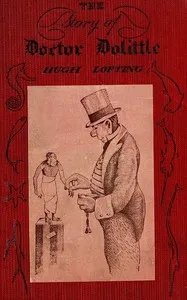
The text is free. Project Gutenberg hosts the 1920 book as ebook no. 501. I am putting that EPUB into Google Play Books and reading it on the tablet. No shop, no subscription, no new app to babysit the project. The file sits there, and the work is only to say it.
Table of contents
Open Table of contents
The book, briefly
Lofting published The Story of Doctor Dolittle in 1920. It is a children’s adventure, written in short, spoken English, and it became the first of a long series. Gutenberg scores the reading ease at about sixth grade. That is why it is a useful first novel to memorize. The sentences are built to be said.
John Dolittle, M.D., lives in the little town of Puddleby-on-the-Marsh with a house too full of animals. His sister keeps house. Patients stop coming. The parrot Polynesia teaches him the languages of animals, and he stops being a doctor of people. He becomes a doctor of beasts. Dab-Dab the duck, Jip the dog, Gub-Gub the pig, and Too-Too the owl make up the rest of the household that matters.
Then a swallow brings news from Africa: the monkeys are dying of an epidemic. Dolittle borrows a ship, sails with his animals, is wrecked, imprisoned, and pulled across a living bridge of apes. He treats the sick. The monkeys give him a pushmi-pullyu, a shy two-headed creature, so that he might earn money at home. Pirates, a boy’s uncle left on a rock, and a long way back to Puddleby fill the return. There are twenty-one chapters. The story ends where it began, in the small house with the large garden.
The Gutenberg text is the original, not a later cleanup. The 1920 book is also a colonial-era children’s tale, and some of it is ugly, especially around Prince Bumpo. Later editions cut or rewrote those pages. I am using this edition because it is the free, complete public-domain text I can put on the tablet today. Memorizing it is a language project, not an endorsement of every attitude the book carries. The sentences still have to be said as they are, and seen as they are.
Why this project
Scott Young’s Ultralearning asks for a named skill, a short stretch of time, and practice in the form of the test. Kim Min-sik’s Have You Ever Memorized an English Book? asks for one book, out loud, until the page is unnecessary. This project is those two instructions glued to a single object.
A conversation manual trains situations. A novel trains a voice: narration, dialogue, the same characters returning, the same jokes landing later because they were stored earlier. Doctor Dolittle is long enough to be a real six-month load and short enough that ten sentences a day can see the last page. It is not CNN. It is not a course with no end. It is a children’s book with a last chapter.
The finish line is visible. On some day in early 2027, the tablet can be closed, the topic of a chapter named, and the English still come out. That is the skill. Not “get better at English.” Not “read more.” Recite one book.
The rules
Book. Hugh Lofting, The Story of Doctor Dolittle (1920). The twenty-one chapters of the story. Not the Gutenberg license, not the later sequels.
Source. The EPUB from Project Gutenberg, uploaded to Google Play Books, read on the tablet.
Dose. Ten sentences a day, spoken aloud. Frequency beats a weekend binge. If ten is too many on a wrecked day, the old sentences are reviewed and no new ones are added. Disappearing for a week is the actual failure.
Test. Cover the English. Say today’s ten from memory. Then say some of yesterday. The page is a prompt, then a check, then it should get in the way.
Horizon. Six months from today. Ten a day for roughly 180 days is about 1,800 sentences. The story itself is a short novel — on the order of 26,000 words, a little under 1,700 sentences once you ignore headings and notes. The arithmetic fits, with a small margin for recopying, illness, and the chapters that run on longer than they look.
What this is not. It is not a vocabulary list. It is not a reading streak. It is not a search for a better book three weeks in, when the middle of Africa gets repetitive. The boredom is part of the load. Switching material would only restart the clock while pretending to be metalearning.
Day one
The first sentence of the book is already a spoken sentence:
Once upon a time, many years ago—when our grandfathers were little children—there was a doctor; and his name was Dolittle—John Dolittle, M.D.
Today is ten of those, from the opening of “Puddleby,” said until the tablet can be locked. Tomorrow those ten come back before the next ten are added. That is the whole machine.
The next action is not a new identity as a language person. Open the EPUB. Mark ten sentences. Close the screen. Say them. If they come out, the project has started — not when this post was published, but when the first page became unnecessary.